
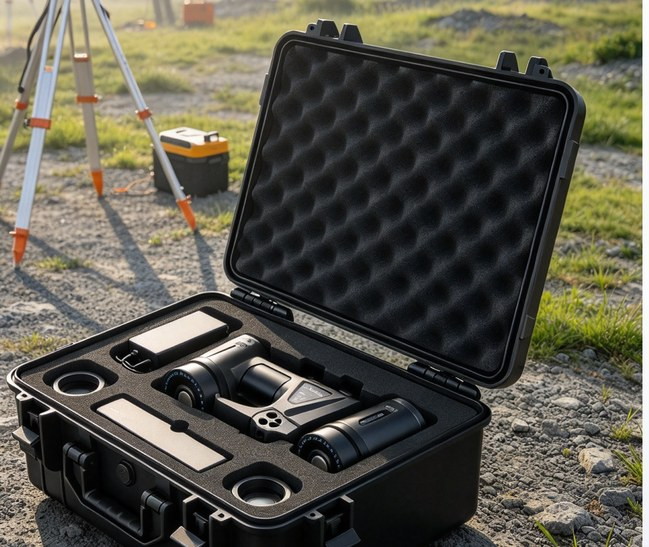
“IP67” is one of the most common specifications on a protective case. What does it actually mean, and how does it differ from IP65 or IP68? Here is a three-minute guide.
What is an IP code?
Ingress Protection (IP) is defined by IEC 60529 and uses two digits:
- First digit (0–6) — protection against solids. 6 means dust tight;
- Second digit (0–9) — water protection, commonly 5, 7 or 8.
- IPX5 — protected against low-pressure water jets (rain spray);
- IPX7 — protected against temporary immersion, typically 30 minutes at 1 m;
- IPX8 — continuous immersion, depth and duration agreed between maker and user.
So IP67 = dust tight + temporary immersion
The ARMYARMOR A7 series is tested to IP67: completely dust tight and dry inside after 30 minutes at 1 m — enough for transport in heavy rain, overnight outdoor use, water crossings and dock handling.
What else matters when choosing a case?
- Sealing design — gasket material and even compression determine service life;
- Pressure relief valve — prevents hard-to-open cases and gasket damage after altitude or temperature changes;
- Material and resistance — PP for oil and impact resistance, ABS for rigidity, both tested for compression, drop and cold;
- Insert — equipment must be restrained, or a waterproof case can still deliver a broken device.
Quick selection: A1/A3 for storage, A5 for instruments, A7 (IP67) for harsh water, AL for heavy transit.
For selection advice, contact our engineers.